

Bowel Obstruction - Advanced Diagnosis & Treatment
Bowel Obstruction (Intestinal Obstruction)
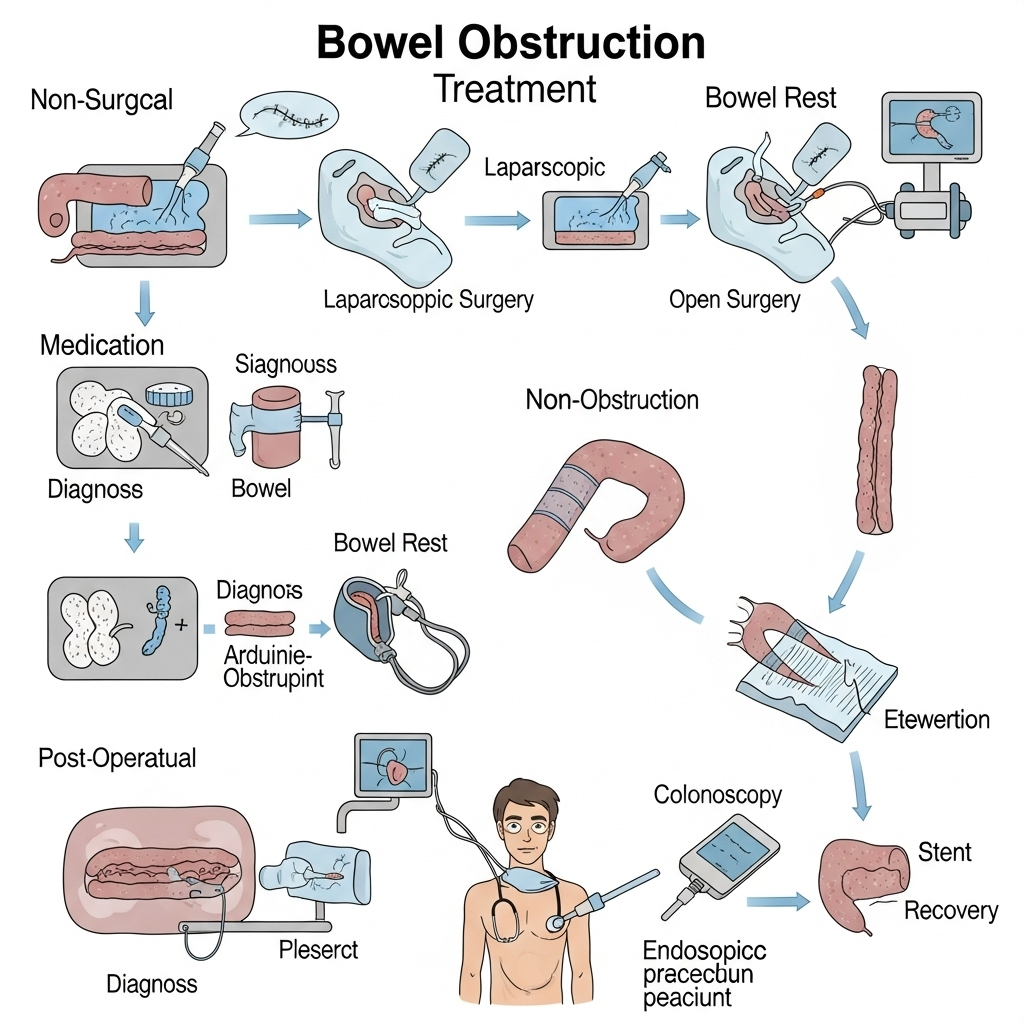
Understanding and Treating Bowel Obstruction
Bowel obstruction, also known as intestinal obstruction, is a serious medical condition where there is a partial or complete blockage in the small or large intestine. This blockage prevents food, fluids, and gas from passing through, leading to a build-up that can cause severe symptoms and, if left untreated, life-threatening complications.
Types of Bowel Obstruction:
Bowel obstructions can be categorized based on their location and nature:
- Small Bowel Obstruction (SBO): More common, affecting the small intestine.
- Large Bowel Obstruction (LBO): Less common, affecting the large intestine (colon).
- Partial Obstruction: Some food and fluid can still pass through.
- Complete Obstruction: Nothing can pass through. This is a medical emergency.
- Mechanical Obstruction: A physical barrier blocks the intestine (e.g., adhesions, tumors).
- Pseudo-obstruction (Paralytic Ileus): No physical blockage exists, but the bowel muscles and nerves aren't working properly, leading to impaired movement.
Common Causes:
The causes vary depending on whether it's a small or large bowel obstruction and its type:
Causes of Mechanical Obstruction:
- Adhesions: Bands of scar tissue that form in the abdomen after previous surgery, being the most common cause of SBO.
- Hernias: A part of the intestine protrudes through a weakened area of the abdominal wall.
- Tumors: Benign or malignant growths within the intestine or pressing on it from outside.
- Inflammatory Bowel Disease (IBD): Conditions like Crohn's disease can cause strictures (narrowing) of the intestine.
- Diverticulitis: Inflammation of small pouches in the colon, which can lead to strictures.
- Volvulus: Twisting of a loop of the intestine, often in the large bowel.
- Intussusception: One part of the intestine telescopes into another, more common in children.
- Impacted Feces: Severe constipation can cause a blockage, especially in the elderly.
Causes of Pseudo-obstruction (Paralytic Ileus):
- Abdominal surgery (common after effects)
- Infections (e.g., peritonitis, appendicitis)
- Certain medications (e.g., opioids, anticholinergics)
- Neurological disorders (e.g., Parkinson's disease)
- Systemic illnesses (e.g., kidney failure, heart attack)
Symptoms of Bowel Obstruction:
Symptoms can develop rapidly or gradually and include:
- Severe, crampy abdominal pain that may come and go
- Nausea and vomiting (vomit may contain bile or even fecal matter in severe cases)
- Abdominal distension (swelling)
- Inability to pass gas or stool (constipation), although partial obstruction may cause diarrhea initially
- Loss of appetite
- Dehydration
It's crucial to seek immediate medical attention if you experience these symptoms, as a complete obstruction can lead to life-threatening complications like bowel perforation or tissue death.
Diagnosis:
Dr. Neeraj Dhar will typically diagnose bowel obstruction through a combination of:
- Physical Examination: Assessing abdominal tenderness, distension, and listening for bowel sounds.
- Medical History: Discussing symptoms, previous surgeries, and medical conditions.
- Imaging Tests:
- Abdominal X-ray: Can show dilated loops of bowel and air-fluid levels.
- CT Scan (Computed Tomography): The most common and accurate test to locate the obstruction, identify its cause, and check for complications.
- MRI (Magnetic Resonance Imaging): Can be used in specific cases, especially for soft tissue visualization.
- Barium Enema or Small Bowel Follow-Through: Less common now, but may be used in certain situations to visualize the bowel.
- Blood Tests: To check for dehydration, electrolyte imbalances, and signs of infection.
Treatment and Management:
Treatment for bowel obstruction depends on the type, location, and severity of the blockage. Dr. Neeraj Dhar provides comprehensive management, which may include:
- Conservative Management:
- Hospitalization: Often required for close monitoring.
- NPO (Nil Per Os): No food or drink by mouth to rest the bowel.
- Intravenous (IV) Fluids: To prevent dehydration and correct electrolyte imbalances.
- Nasogastric (NG) Tube: A tube inserted through the nose into the stomach to decompress the bowel and relieve vomiting and distension.
- Pain Management: Medications to control abdominal pain.
- Endoscopic Interventions:
- Colonoscopic Decompression: For some large bowel obstructions, a colonoscope can be used to relieve pressure.
- Stent Placement: In cases of malignant (cancerous) obstructions, an endoscopic stent can be placed to keep the bowel open, often as a palliative measure.
- Balloon Dilation: For certain benign strictures, endoscopic balloon dilation can widen the narrowed area.
- Surgical Intervention:
- Emergency Surgery: Often necessary for complete obstructions, especially those involving strangulation (blood supply cut off), which can lead to tissue death and perforation.
- Lysis of Adhesions: Surgically cutting scar tissue causing the blockage.
- Resection: Removing the blocked or damaged section of the bowel and rejoining the healthy ends.
- Hernia Repair: Correcting a hernia that is causing the obstruction.
- Tumor Removal: Excising tumors that are blocking the intestine.
- Addressing Underlying Causes: Treating conditions like inflammatory bowel disease, or managing medications causing paralytic ileus.
Why Choose Dr. Neeraj Dhar for Bowel Obstruction?
Dr. Neeraj Dhar is a highly skilled Gastroenterologist in Faridabad with extensive experience in the prompt diagnosis and comprehensive management of bowel obstructions. He understands the urgency and complexity of these conditions, offering both advanced endoscopic solutions and collaborating closely with surgical colleagues when operative intervention is required. Dr. Dhar's expertise ensures that patients receive the most appropriate and effective treatment plan, focused on resolving the obstruction, preventing complications, and restoring optimal digestive function.
If you or someone you know is experiencing symptoms of bowel obstruction, immediate medical evaluation by a specialist like Dr. Neeraj Dhar is crucial for timely and effective care.