
PEG Tube Placement (Percutaneous Endoscopic Gastrostomy)
- Advanced Endoscopy
- Upper GI Endoscopy
- Lower GI Endoscopy (Colonoscopy)
- ERCP (CBD Stone Removal / Stenting)
- EUS Guided Procedures (FNA/FNB, Drainage)
- Single / Double Balloon Enteroscopy
- Esophageal / Antral Stenting
- Esophageal & Anorectal Manometry
- Foreign Body Removal
- PEG Tube Placement
- POEM (Peroral Endoscopic Myotomy)
- STER (Submucosal Tunneling Endoscopic Resection)
- ESD (Endoscopic Submucosal Dissection)
- EMR (Endoscopic Mucosal Resection)
- Spyglass for Pancreatic Biliary Pathology
- Gastrointestinal Bleeding
- Biliary & Pancreatic Stenting
- Anti Reflux Procedures
Percutaneous Endoscopic Gastrostomy (PEG) Tube Placement
PEG Tube Placement: Ensuring Nutritional Support When Oral Intake Is Challenged
For patients who are unable to swallow safely or adequately for an extended period, a **Percutaneous Endoscopic Gastrostomy (PEG) tube** provides a vital and effective method for long-term nutritional support. PEG tube placement is a minimally invasive endoscopic procedure where a feeding tube is inserted directly into the stomach through the abdominal wall, allowing for direct delivery of liquid nutrition, fluids, and medications.
What is PEG Tube Placement?
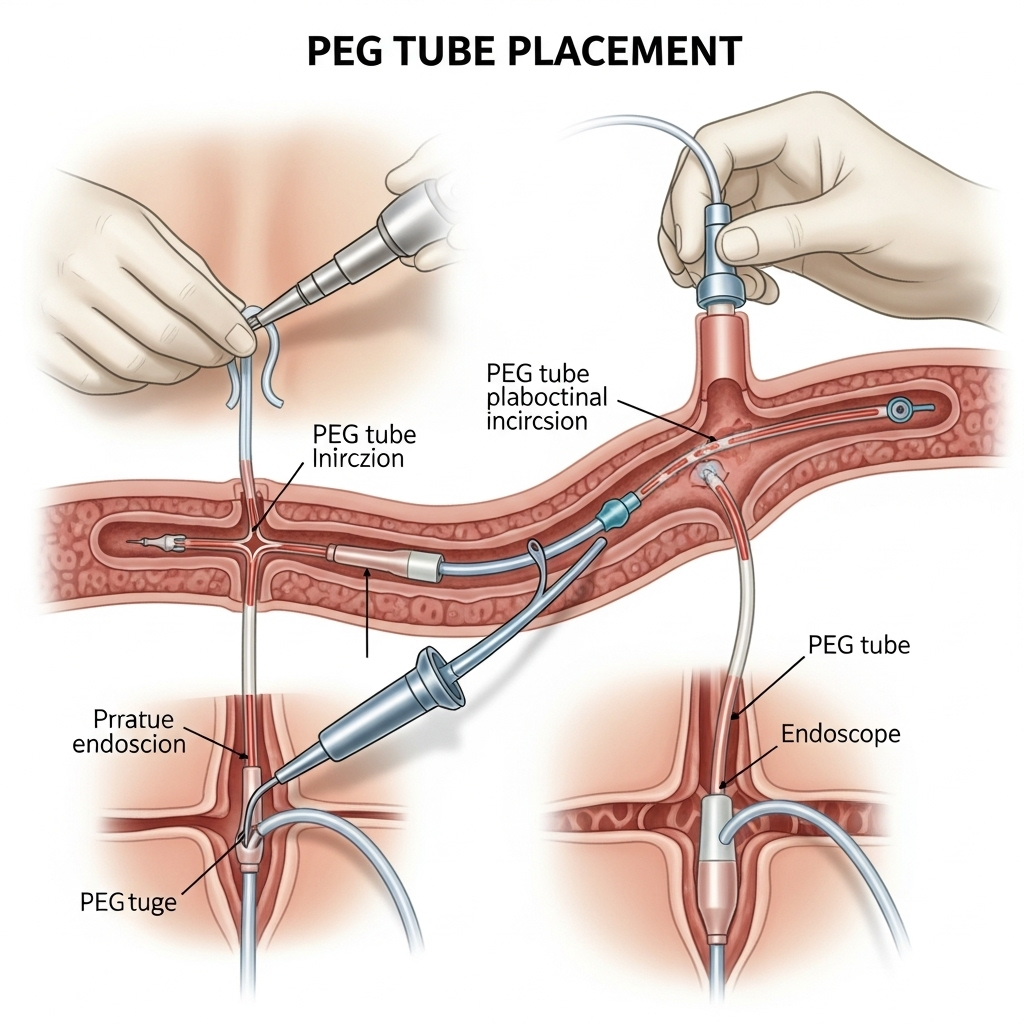
The PEG tube placement is performed endoscopically. Dr. Neeraj Dhar uses an endoscope (a thin, flexible tube with a camera) to visualize the inside of the stomach. Simultaneously, a small incision is made in the abdominal wall, and with endoscopic guidance, the PEG tube is safely inserted through this opening into the stomach. An internal bumper keeps the tube securely in place inside the stomach, while an external bumper secures it on the outside of the abdomen.
Why is PEG Tube Placement Performed? (Indications)
A PEG tube is indicated when a patient requires long-term feeding support, typically exceeding 4-6 weeks, and cannot safely or sufficiently take nutrition orally. Common indications include:
- Neurological Conditions: Such as stroke, Parkinson's disease, Amyotrophic Lateral Sclerosis (ALS), or multiple sclerosis, which impair swallowing (dysphagia).
- Head and Neck Cancers: Where the tumor or radiation therapy makes eating difficult, painful, or impossible.
- Critical Illness or Trauma: For patients who are unconscious or have sustained injuries preventing oral intake for prolonged periods.
- Severe Malnutrition: When oral feeding is insufficient to meet a patient's nutritional needs due to various chronic illnesses.
- Gastrointestinal Motility Disorders: In select cases where food cannot pass normally through the upper digestive tract.
Benefits of a PEG Tube:
- Improved Nutrition: Ensures adequate caloric and fluid intake, preventing malnutrition and dehydration.
- Medication Delivery: Provides a convenient way to administer medications directly into the stomach.
- Enhanced Quality of Life: For many patients, it allows them to receive necessary nutrition at home, avoiding prolonged hospital stays for feeding.
- Reduced Aspiration Risk: Lower risk of food or fluid entering the lungs compared to prolonged nasogastric tube use in certain patients.
Preparation for the Procedure:
Proper preparation is key for a safe and successful PEG placement:
- Fasting: You will need to fast for at least 6-8 hours before the procedure (no food or drink) to ensure your stomach is empty.
- Medication Review: Inform Dr. Dhar about all your medications, especially blood thinners, as adjustments may be necessary to minimize bleeding risk.
- Blood Tests: Blood tests (e.g., coagulation profile) may be done to ensure you are a suitable candidate.
- Arranging for a Ride: Since you will receive sedation, you must arrange for someone to drive you home after the procedure and stay with you.
What to Expect During the Procedure:
- You will receive **conscious sedation** intravenously to help you relax and minimize discomfort. In some cases, local anesthesia at the abdominal incision site is also used.
- You will lie comfortably, and the endoscope will be gently passed through your mouth into your stomach.
- Dr. Dhar will identify the optimal site for PEG placement on the abdominal wall, using the light from the endoscope inside the stomach as a guide.
- A small incision will be made, and the PEG tube will be inserted through the abdominal wall into the stomach, with the endoscope guiding its placement.
- The procedure typically takes about 20-30 minutes.
Recovery and Post-Procedure Care:
- After the PEG placement, you will be monitored in a recovery area until the effects of sedation wear off.
- You may experience some mild discomfort or soreness at the insertion site, which can be managed with pain medication.
- Initial feeding usually begins with clear liquids within 4-6 hours, gradually progressing to formula feeds as tolerated.
- Crucially, you and/or your caregivers will receive detailed instructions on **PEG tube care**, including:
- Cleaning and dressing changes around the stoma (the opening where the tube enters the body).
- Flushing the tube to prevent clogging.
- Proper administration of feeds and medications.
- Monitoring for signs of complications (e.g., redness, swelling, drainage, pain, fever).
Why Choose Dr. Neeraj Dhar for PEG Tube Placement?
Dr. Neeraj Dhar is a highly experienced and skilled gastroenterologist in Faridabad with extensive expertise in performing safe and effective PEG tube placements. He understands the critical role of nutritional support in patient recovery and long-term care. Dr. Dhar's meticulous approach, combined with his compassionate care, ensures that the procedure is performed with the utmost precision, and patients and their families receive thorough education on post-procedure care. He is dedicated to improving the quality of life for individuals who require enteral feeding.
If you or a loved one requires long-term nutritional support and PEG tube placement has been recommended, consult Dr. Neeraj Dhar for expert evaluation and compassionate care in Faridabad.