

Piles Surgery
- GI & Bariatric Surgery
- Whipple Surgery
- Bariatric Surgery
- Liver Resection
- Gastro Esophageal Surgeries
- Colorectal Surgeries
- Appendectomy
- Hemorrhoidectomy
- Partial Colectomy
- Nissen Fundoplication
- Piles Surgery
- Peptic / Gastric Ulcer Treatment
- Gastrointestinal Surgery
- Surgery for Morbid Obesity
- Hepatopancreaticobiliary Surgery
- Post-Cholecystectomy Bile Duct Injury
- Incisional Hernia
- Minimally Invasive Surgery
- Gallbladder (Biliary) Stone Treatment
Piles Surgery (Hemorrhoidectomy)
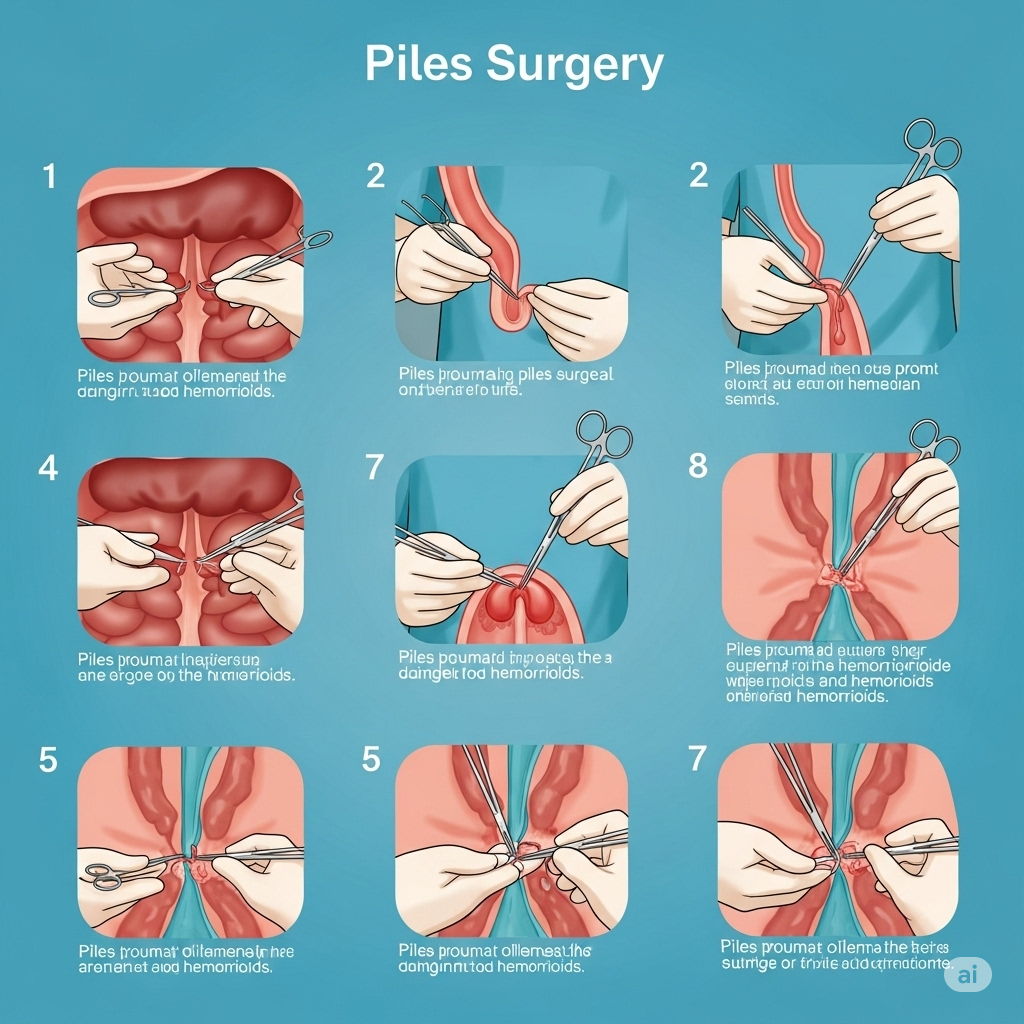
Piles Surgery (Hemorrhoidectomy): Comprehensive Treatment for Hemorrhoids
**Piles surgery**, also known as **hemorrhoidectomy**, is a surgical procedure performed to remove severely prolapsed, thrombosed, or persistently symptomatic hemorrhoids when conservative treatments have failed. Hemorrhoids (piles) are swollen veins in the anus and lower rectum, similar to varicose veins. While Dr. Neeraj Dhar, a leading Gastroenterologist in Faridabad, does **not** perform the surgical procedure himself, he plays a vital role in the **diagnosis, non-surgical management, and comprehensive pre/post-operative care** for patients suffering from hemorrhoids.
Understanding Hemorrhoids and When Surgery is Indicated:
Hemorrhoids can be internal (inside the rectum) or external (under the skin around the anus). They are caused by increased pressure in the veins of the anus and rectum, often due to straining during bowel movements, chronic constipation or diarrhea, pregnancy, or obesity. While many cases respond to lifestyle changes and medication, surgery becomes necessary for:
- **Grade III or IV Internal Hemorrhoids:** Hemorrhoids that prolapse (protrude from the anus) and require manual reduction (Grade III) or remain permanently prolapsed (Grade IV).
- **Large External Hemorrhoids:** Especially those causing significant discomfort, pain, or difficulty with hygiene.
- **Thrombosed External Hemorrhoids:** When a blood clot forms within an external hemorrhoid, causing severe pain.
- **Persistent Bleeding:** When bleeding is significant and not controlled by conservative measures.
- **Failed Conservative Treatments:** When banding, infrared coagulation, or other non-surgical methods haven't provided lasting relief.
Types of Piles Surgery (Hemorrhoidectomy):
Several surgical techniques are available, tailored to the type and severity of hemorrhoids:
1. Conventional Hemorrhoidectomy (Excisional Hemorrhoidectomy):
- This is the most effective treatment for severe hemorrhoids, especially large external or prolapsed internal hemorrhoids.
- The surgeon removes the hemorrhoidal tissue and associated blood vessels.
- Can be open (wound left open) or closed (wound sutured).
- **Pros:** High success rate, low recurrence rate.
- **Cons:** More post-operative pain, longer recovery time.
2. Stapled Hemorrhoidectomy (Procedure for Prolapse and Hemorrhoids - PPH):
- Less invasive than conventional hemorrhoidectomy.
- A circular stapling device is used to remove a ring of tissue above the hemorrhoids, lifting and repositioning them back into the anal canal. This also cuts off blood supply to the hemorrhoids, causing them to shrink.
- **Pros:** Less pain, faster recovery compared to conventional surgery.
- **Cons:** Higher recurrence rate than conventional surgery for some grades, potential for specific complications.
3. Laser Hemorrhoidectomy (Laser Hemorrhoidoplasty - LHP / Laser Ablation):
- A minimally invasive procedure where a laser fiber is inserted into the hemorrhoidal tissue to shrink and seal it.
- **Pros:** Less pain, faster healing, no cutting, minimal bleeding.
- **Cons:** May not be suitable for all types/grades of hemorrhoids, long-term efficacy still being studied.
4. Doppler-Guided Hemorrhoid Artery Ligation (DG-HAL or THD):
- Uses a Doppler ultrasound to identify and ligate (tie off) the arteries supplying blood to the hemorrhoids.
- **Pros:** Minimally invasive, less painful.
- **Cons:** Primarily for bleeding internal hemorrhoids, less effective for large prolapsed hemorrhoids.
Preparation for Piles Surgery:
Before any surgical intervention, Dr. Neeraj Dhar provides comprehensive diagnostic and preparatory care:
- **Thorough Examination:** A physical examination, including a digital rectal exam and proctoscopy, to assess the type, size, and severity of hemorrhoids.
- **Colonoscopy:** In some cases, especially for patients over 40-50 years of age with bleeding, a colonoscopy might be recommended to rule out other serious conditions like colorectal cancer that can mimic hemorrhoid symptoms.
- **Medical History and Medications:** Reviewing patient's health history and current medications, particularly blood thinners, which may need to be adjusted before surgery.
- **Bowel Preparation:** Instructions for bowel cleansing (e.g., enema or laxatives) might be given.
- **Fasting:** Patients are advised to fast for a specific period before the surgery.
Recovery and Post-Procedure Care:
Recovery depends on the type of surgery:
- **Pain Management:** Post-operative pain can range from mild to significant, especially with conventional hemorrhoidectomy. Pain relievers, sitz baths (warm water baths for the anal area), and topical creams are often prescribed.
- **Bowel Movements:** Stool softeners and a high-fiber diet are crucial to prevent constipation and straining, which can exacerbate pain and delay healing.
- **Hygiene:** Gentle cleaning of the anal area after bowel movements is important.
- **Activity:** Rest is recommended for the first few days. Gradual return to normal activities, avoiding heavy lifting or prolonged sitting, as advised by the surgeon.
- **Follow-up:** Regular follow-up appointments with the surgical team and Dr. Neeraj Dhar are essential to monitor healing and address any concerns.
Potential Risks and Complications:
While piles surgery is generally safe, potential complications can include:
- **Pain:** The most common complication, varying in intensity.
- **Bleeding:** Especially during or after bowel movements.
- **Infection:** Though rare, possible at the surgical site.
- **Urinary Retention:** Temporary difficulty urinating due to pain or anesthesia effects.
- **Anal Stricture:** Narrowing of the anal canal (rare, more common after extensive conventional hemorrhoidectomy).
- **Fecal Incontinence:** Temporary or, rarely, permanent difficulty controlling bowel movements.
- **Recurrence of Hemorrhoids:** Though surgery aims for long-term relief, new hemorrhoids can develop over time.
- **Anesthesia-related risks.**
Dr. Neeraj Dhar's Role in Hemorrhoid Management:
Dr. Neeraj Dhar's expertise as a Gastroenterologist is invaluable for patients dealing with hemorrhoids:
- **Accurate Diagnosis:** He performs the necessary diagnostic procedures, including proctoscopy and, if indicated, colonoscopy, to accurately diagnose hemorrhoids and rule out other underlying gastrointestinal conditions that may present with similar symptoms.
- **Conservative Management:** He guides patients through initial non-surgical treatments, including dietary modifications, lifestyle changes, medications, and sometimes office-based procedures like rubber band ligation or infrared coagulation for early-stage hemorrhoids.
- **Surgical Referral & Coordination:** When surgery is deemed necessary, Dr. Dhar collaborates closely with experienced general surgeons, ensuring a seamless transition of care and effective communication regarding the patient's GI health.
- **Pre-operative Optimization:** He prepares patients for surgery by optimizing their bowel health and overall gastrointestinal function.
- **Post-operative Care & Management:** After surgery, Dr. Dhar provides comprehensive follow-up care, managing any post-operative GI symptoms, ensuring proper healing, and addressing long-term digestive health. He helps patients maintain lifestyle changes to prevent recurrence.
If you are experiencing symptoms of hemorrhoids, consult with Dr. Neeraj Dhar in Faridabad for a thorough evaluation and to determine the most appropriate and effective treatment plan, whether medical or surgical. His holistic approach ensures optimal outcomes and long-term well-being.