

Hepatopancreaticobiliary Surgery (HPBS)
- GI & Bariatric Surgery
- Whipple Surgery
- Bariatric Surgery
- Liver Resection
- Gastro Esophageal Surgeries
- Colorectal Surgeries
- Appendectomy
- Hemorrhoidectomy
- Partial Colectomy
- Nissen Fundoplication
- Piles Surgery
- Peptic / Gastric Ulcer Treatment
- Gastrointestinal Surgery
- Surgery for Morbid Obesity
- Hepatopancreaticobiliary Surgery
- Post-Cholecystectomy Bile Duct Injury
- Incisional Hernia
- Minimally Invasive Surgery
- Gallbladder (Biliary) Stone Treatment
Hepatopancreaticobiliary Surgery (HPBS)
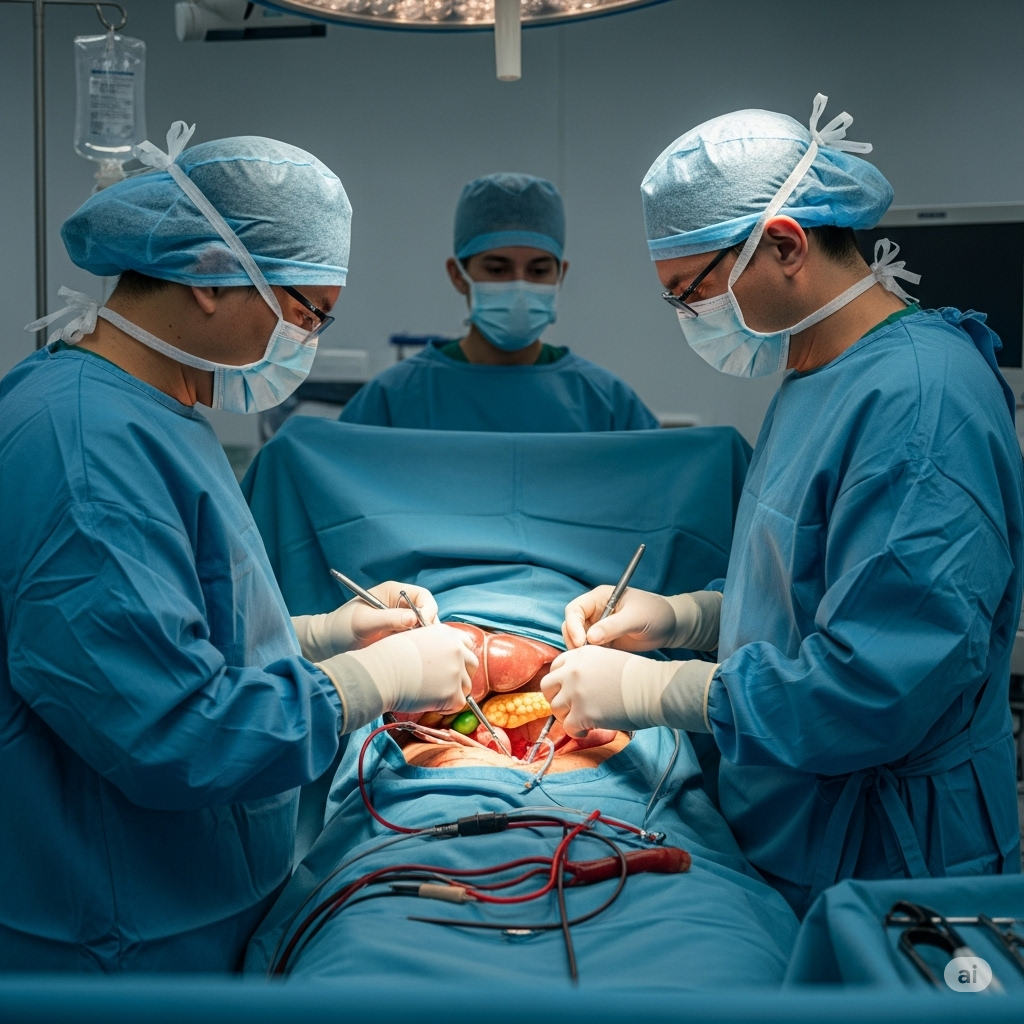
Hepatopancreaticobiliary (HPB) Surgery: Complex Care for Liver, Pancreas, and Bile Ducts
**Hepatopancreaticobiliary (HPB) Surgery** is a highly specialized field of surgery that focuses on conditions affecting the liver, pancreas, and bile ducts (including the gallbladder). These are often complex and life-threatening diseases, many of which involve cancer. Given the intricate anatomy and critical functions of these organs, HPB surgery demands exceptional expertise and is typically performed by highly trained HPB surgeons as part of a multidisciplinary team. While **Dr. Neeraj Dhar, a leading Gastroenterologist in Faridabad, does not perform the surgical procedures in HPB surgery, he plays an absolutely critical and indispensable role in the entire patient journey**, from precise **diagnosis and pre-operative optimization to comprehensive post-operative management of complications** using his advanced endoscopic skills.
Understanding HPB Conditions and Surgical Indications:
HPB surgery addresses a wide range of benign and malignant conditions, including:
- **Cancers:**
- **Liver Cancer:** Primary liver cancers (e.g., hepatocellular carcinoma) or metastatic tumors that have spread to the liver from other organs.
- **Pancreatic Cancer:** Especially adenocarcinoma of the pancreas.
- **Bile Duct Cancer (Cholangiocarcinoma):** Cancers originating in the bile ducts.
- **Gallbladder Cancer:** Malignancies originating in the gallbladder.
- **Benign Tumors and Cysts:** Such as liver adenomas, focal nodular hyperplasia, pancreatic cysts (e.g., IPMNs, serous cystadenomas), or bile duct cysts, especially if they are symptomatic or have malignant potential.
- **Stones:** Complicated gallstones (e.g., choledocholithiasis - stones in the common bile duct) or intrahepatic stones.
- **Inflammatory Conditions:** Severe or complicated pancreatitis, chronic pancreatitis with ductal obstruction, or inflammatory strictures of the bile duct.
- **Trauma:** Injuries to the liver, pancreas, or bile ducts.
Common HPB Surgical Procedures:
The type of surgery depends on the specific condition, its location, and extent. Some common procedures include:
1. Whipple Procedure (Pancreaticoduodenectomy):
- A highly complex operation primarily performed for cancers of the head of the pancreas, duodenum, distal bile duct, or ampulla.
- Involves removing the head of the pancreas, the duodenum (first part of the small intestine), the gallbladder, and a portion of the bile duct. The remaining pancreas and bile duct are then reconnected to the small intestine.
2. Liver Resection (Hepatectomy):
- Surgical removal of a diseased or cancerous portion of the liver. This can range from removing a small segment to a lobectomy (removing an entire lobe).
3. Distal Pancreatectomy:
- Removal of the body and/or tail of the pancreas, often with the spleen (splenectomy), for tumors or cysts in these regions.
4. Bile Duct Resection and Reconstruction:
- Performed for bile duct cancers (cholangiocarcinoma) or severe benign strictures, involving removal of the affected bile duct and creation of a new connection to the intestine.
5. Cholecystectomy:
- Surgical removal of the gallbladder, most commonly performed laparoscopically for symptomatic gallstones.
Preparation for HPB Surgery:
Given the complexity, preparation is thorough and involves a multidisciplinary team, where Dr. Neeraj Dhar's role is pivotal:
- **Comprehensive Diagnostic Workup (Gastroenterologist-led):**
- **Imaging:** High-resolution CT scans, MRIs, and MRCP (Magnetic Resonance Cholangiopancreatography) to precisely locate the lesion and assess its extent.
- **Endoscopic Ultrasound (EUS):** Performed by Dr. Dhar, EUS allows for highly detailed imaging of the pancreas, bile ducts, and surrounding structures. It enables precise needle biopsies (EUS-FNA) of suspicious lesions in the pancreas or around the bile duct, which is crucial for diagnosis and staging.
- **Endoscopic Retrograde Cholangiopancreatography (ERCP):** Performed by Dr. Dhar, ERCP is used for diagnostic purposes (e.g., obtaining brushings/biopsies from bile duct lesions) and therapeutic interventions like stent placement to relieve bile duct obstruction (e.g., due to tumors or stones) or drain pancreatic ducts. This is often a critical step to optimize a patient before surgery, especially if jaundice is present.
- **Nutritional Assessment and Optimization:** Patients often have nutritional deficiencies, especially with pancreatic or bile duct conditions.
- **Assessment of Liver/Pancreatic Function:** To ensure the organs can tolerate surgery.
- **General Health Evaluation:** Thorough assessment for cardiac, pulmonary, and other systemic issues.
- **Discussion of Risks and Benefits:** Detailed counseling by the surgeon and gastroenterologist.
Recovery and Post-Operative Care:
HPB surgeries are major operations requiring extensive post-operative care:
- **Intensive Care Unit (ICU) Stay:** Patients typically spend time in the ICU immediately after surgery for close monitoring.
- **Pain Management:** Aggressive pain control is essential.
- **Drainage Tubes:** Surgical drains are often placed to manage fluid accumulation or potential leaks.
- **Nutritional Support:** Initial nutrition may be through intravenous fluids or specialized enteral feeding. Gradual progression to oral diet is managed carefully.
- **Monitoring for Complications:** Close monitoring for serious complications such as pancreatic fistulas (leaks of pancreatic fluid), bile leaks, bleeding, and infections.
- **Long-term Follow-up:** Essential with both the surgical team and Dr. Neeraj Dhar to monitor recovery, manage any chronic GI or nutritional issues, and perform surveillance for recurrence in cancer cases.
Potential Risks and Complications:
HPB surgeries carry significant risks due to their complexity and the vital nature of the organs involved:
- **Pancreatic Fistula:** Leakage of digestive fluid from the pancreas, a serious complication after pancreatic surgery.
- **Bile Leak:** Leakage from the bile ducts.
- **Bleeding:** Intra-operative or post-operative hemorrhage.
- **Infection:** At the surgical site or intra-abdominal abscesses.
- **Delayed Gastric Emptying:** Stomach takes longer to empty its contents.
- **Malabsorption and Nutritional Deficiencies:** Especially after extensive resections.
- **Strictures:** Narrowing at the surgical connections (anastomoses).
- **Diabetes:** Can occur after significant pancreatic resection.
- **Anesthesia-related risks.**
Dr. Neeraj Dhar's Indispensable Role in HPB Care:
While an HPB surgeon performs the operation, Dr. Neeraj Dhar's expertise as a Gastroenterologist is absolutely critical at every stage of the patient's journey:
- **Advanced Diagnostic Procedures:** He utilizes cutting-edge endoscopic techniques like **EUS (Endoscopic Ultrasound) with FNA (Fine Needle Aspiration)** for highly accurate diagnosis and staging of pancreatic and bile duct lesions. His proficiency in **ERCP (Endoscopic Retrograde Cholangiopancreatography)** is vital for relieving bile duct obstructions (e.g., by stenting for jaundice) pre-operatively, and for managing post-operative bile leaks or strictures.
- **Pre-operative Optimization:** Dr. Dhar helps optimize patients' gastrointestinal health before surgery, managing conditions that could affect surgical outcomes. For instance, addressing cholangitis through ERCP drainage can significantly improve patient safety before major liver or pancreatic resections.
- **Post-operative Complication Management:** His endoscopic skills are invaluable in managing post-surgical complications such as:
- **Bile Leaks:** Endoscopic stenting or drainage.
- **Anastomotic Strictures:** Endoscopic dilation.
- **Pancreatitis or Pancreatic Fistulas:** Endoscopic drainage or stenting of pancreatic ducts.
- **Gastrointestinal Bleeding:** Endoscopic hemostasis.
- **Nutritional Support & Long-term Follow-up:** He plays a key role in managing post-operative malabsorption, ensuring adequate nutritional support, and monitoring for long-term complications related to altered GI anatomy and function. For cancer patients, he collaborates in surveillance strategies.
- **Multidisciplinary Team Collaboration:** Dr. Dhar is an active member of the HPB multidisciplinary team, collaborating closely with surgeons, oncologists, radiologists, and pathologists to formulate the best individualized treatment plan for each complex case.
If you or a loved one are facing a complex liver, pancreas, or bile duct condition requiring HPB surgery, consulting with a specialized team including Dr. Neeraj Dhar in Faridabad is paramount. His diagnostic acumen and endoscopic therapeutic expertise ensure comprehensive, state-of-the-art care, significantly contributing to better patient outcomes.