

Peptic Ulcer Treatment
- GI & Bariatric Surgery
- Whipple Surgery
- Bariatric Surgery
- Liver Resection
- Gastro Esophageal Surgeries
- Colorectal Surgeries
- Appendectomy
- Hemorrhoidectomy
- Partial Colectomy
- Nissen Fundoplication
- Peptic / Gastric Ulcer Treatment
- Piles Surgery
- Gastrointestinal Surgery
- Surgery for Morbid Obesity
- Hepatopancreaticobiliary Surgery
- Post-Cholecystectomy Bile Duct Injury
- Incisional Hernia
- Minimally Invasive Surgery
- Gallbladder (Biliary) Stone Treatment
Peptic Ulcer Treatment
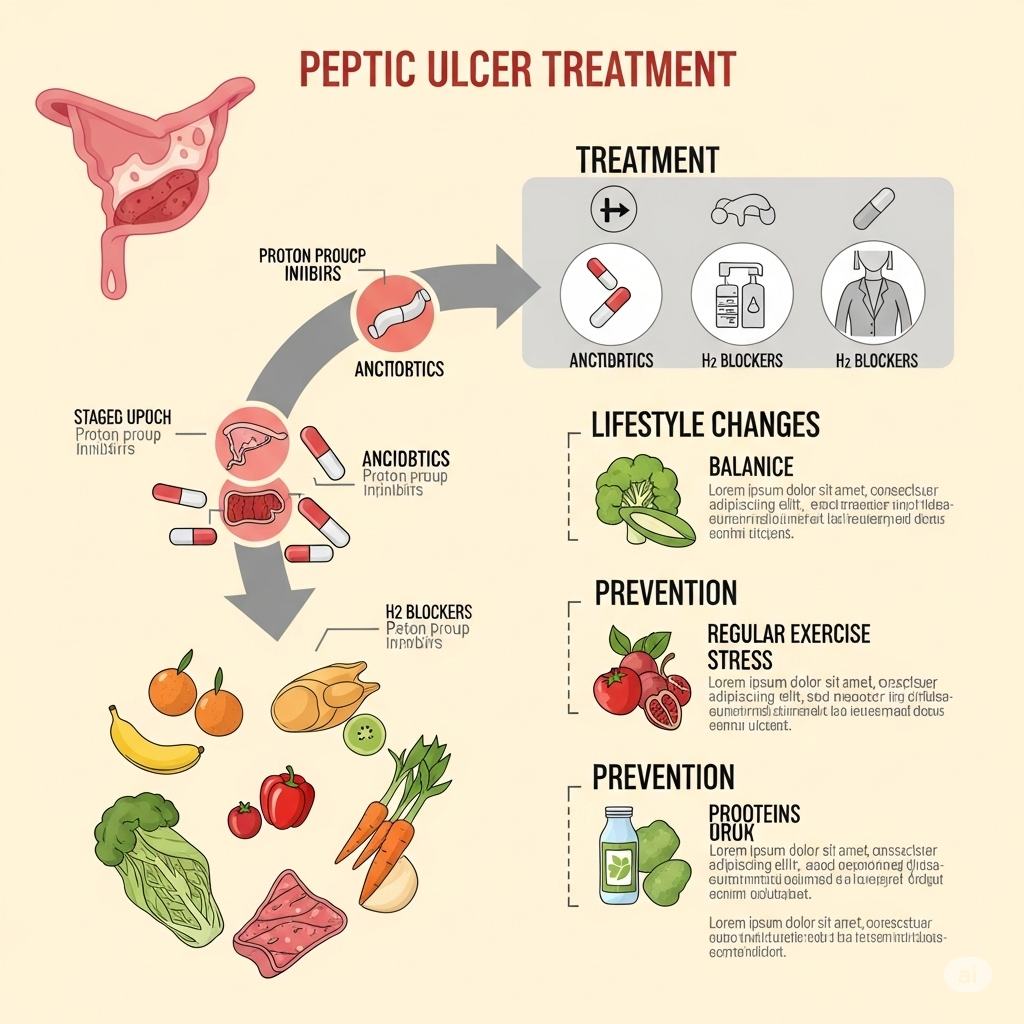
Expert Diagnosis & Medical Management for Peptic Ulcers
**Peptic ulcers** are open sores that develop on the inside lining of the stomach (gastric ulcers) and the upper portion of the small intestine (duodenal ulcers). While often painful, these ulcers are treatable, especially with early and accurate diagnosis. Dr. Neeraj Dhar, a highly respected **Gastroenterologist** in Faridabad, specializes in identifying the underlying causes of peptic ulcers and providing comprehensive medical management to promote healing and prevent recurrence. His expertise ensures that patients receive tailored care, from precise diagnosis through advanced endoscopic techniques to effective medication regimens and lifestyle guidance.
Understanding Peptic Ulcers and Their Causes:
Peptic ulcers occur when the protective lining of the digestive tract is eroded by stomach acid. The most common causes include:
- **Helicobacter pylori (H. pylori) infection:** A common bacterium that can live in the digestive tract and cause inflammation and ulcers.
- **Nonsteroidal Anti-inflammatory Drugs (NSAIDs):** Long-term use of pain relievers like aspirin, ibuprofen, and naproxen can irritate the stomach lining and lead to ulcers.
- Less common causes include Zollinger-Ellison syndrome (a rare condition that causes the body to produce too much stomach acid) or severe stress.
Common Symptoms of Peptic Ulcers:
- **Burning stomach pain:** This is the most common symptom, often felt between the breastbone and the navel. The pain may be worse when your stomach is empty, between meals, or at night, and may be temporarily relieved by eating or taking antacids.
- Bloating and belching.
- Nausea or vomiting.
- Loss of appetite or weight loss.
- Dark or black stools (due to bleeding ulcers).
- Vomiting blood (a sign of significant bleeding, requiring immediate medical attention).
Dr. Neeraj Dhar's Approach to Peptic Ulcer Treatment:
As a leading gastroenterologist, Dr. Neeraj Dhar focuses on a multi-faceted approach to peptic ulcer management:
1. Accurate Diagnosis:
- **Clinical Evaluation:** A thorough assessment of your symptoms and medical history.
- **Upper Endoscopy (EGD):** This is the gold standard for diagnosing peptic ulcers. Dr. Dhar uses a thin, flexible tube with a camera (endoscope) to visualize the esophagus, stomach, and duodenum directly. This allows for precise identification of ulcers, assessment of their size and location, and biopsy collection to test for H. pylori or rule out malignancy.
- **H. pylori Tests:** If H. pylori is suspected, tests such as urea breath test, stool antigen test, or biopsy during endoscopy will be performed to confirm the infection.
2. Comprehensive Medical Management:
- **Acid-Reducing Medications:** Dr. Dhar prescribes powerful medications like Proton Pump Inhibitors (PPIs) to significantly reduce stomach acid production, allowing the ulcer to heal.
- **H. pylori Eradication Therapy:** If H. pylori infection is detected, a specific combination of antibiotics along with acid-reducing medications is prescribed to eliminate the bacteria.
- **Cytoprotective Agents:** Medications that protect the lining of the stomach and duodenum may also be used.
- **NSAID Management:** If NSAID use is contributing to ulcers, Dr. Dhar will advise on alternatives or strategies to minimize their impact.
3. Lifestyle and Dietary Guidance:
- Patients are advised on dietary adjustments that can help manage symptoms and promote healing.
- Recommendations are provided to avoid factors that can exacerbate ulcers, such as smoking, excessive alcohol consumption, and certain foods.
- Stress management techniques may also be discussed.
4. Management of Complications:
While medical treatment is usually highly effective, ulcers can sometimes lead to complications such as bleeding, perforation, or obstruction. In such cases, Dr. Dhar provides immediate care, which may include endoscopic interventions (during an EGD) to stop bleeding, or prompt referral to a surgical team for emergency surgical intervention if necessary.
5. Follow-up and Prevention of Recurrence:
- Dr. Dhar monitors your progress closely to ensure the ulcer has healed and symptoms have resolved.
- He provides strategies to prevent future ulcers, especially by eradicating H. pylori and managing NSAID use.
If you are experiencing symptoms suggestive of a peptic ulcer, prompt consultation with a specialist like Dr. Neeraj Dhar is essential for accurate diagnosis and effective treatment. His dedicated approach ensures optimal outcomes for your digestive health in Faridabad.