

Gastrointestinal Surgery
- GI & Bariatric Surgery
- Whipple Surgery
- Bariatric Surgery
- Liver Resection
- Gastro Esophageal Surgeries
- Colorectal Surgeries
- Appendectomy
- Hemorrhoidectomy
- Partial Colectomy
- Nissen Fundoplication
- Peptic / Gastric Ulcer Treatment
- Piles Surgery
- Gastrointestinal Surgery
- Surgery for Morbid Obesity
- Hepatopancreaticobiliary Surgery
- Post-Cholecystectomy Bile Duct Injury
- Incisional Hernia
- Minimally Invasive Surgery
- Gallbladder (Biliary) Stone Treatment
Gastrointestinal Surgery
Comprehensive Care for Gastrointestinal Surgical Needs
**Gastrointestinal (GI) surgery** refers to operations performed on the organs of the digestive system, including the esophagus, stomach, small intestine, large intestine (colon), rectum, anus, and associated organs like the liver, pancreas, and gallbladder. While many GI conditions can be managed medically, certain complex or advanced cases require surgical intervention. Dr. Neeraj Dhar, a distinguished **Gastroenterologist** in Faridabad, plays a pivotal role in the comprehensive care pathway for patients needing GI surgery, from initial diagnosis and medical optimization to post-operative follow-up, ensuring integrated and effective treatment.
When is Gastrointestinal Surgery Needed?
GI surgery is considered for various conditions when medical treatments are insufficient or when life-threatening complications arise. Common indications include:
- **Gastrointestinal Cancers:** Such as colorectal cancer, gastric cancer, esophageal cancer, pancreatic cancer, and liver cancer.
- **Inflammatory Bowel Disease (IBD):** For complications of Crohn's disease or ulcerative colitis that don't respond to medication, like strictures, fistulas, or severe bleeding.
- **Severe Acid Reflux (GERD):** When medical therapy fails to control symptoms or complications like Barrett's esophagus develop.
- **Diverticulitis:** For recurrent or complicated cases, including perforation or abscess.
- **Gallstones:** Causing recurrent pain or complications like pancreatitis or cholecystitis.
- **Appendicitis:** Inflammation of the appendix, often requiring emergency removal.
- **Hernias:** Protrusion of an organ or tissue through an abnormal opening, necessitating repair.
- **Morbid Obesity:** Bariatric surgeries are performed to aid significant weight loss.
- **Complicated Peptic Ulcers:** Such as perforation or severe bleeding that cannot be managed endoscopically.
- **Bowel Obstruction or Strictures:** Blockages that impede food passage.
- **Hemorrhoids and other Anorectal Conditions:** When conservative treatments are ineffective.
Dr. Neeraj Dhar's Role in GI Surgical Patient Care:
As a gastroenterologist, Dr. Neeraj Dhar’s involvement is crucial throughout the surgical journey, ensuring a holistic approach to patient care:
1. Precise Diagnosis:
- Utilizing advanced diagnostic tools like **endoscopy, colonoscopy, capsule endoscopy**, and specialized imaging (CT, MRI) to accurately diagnose GI conditions that may necessitate surgery.
- Performing biopsies during endoscopy to confirm diagnoses such as cancer or inflammatory bowel disease.
2. Pre-operative Optimization:
- **Medical Management:** Optimizing the patient's underlying GI condition and overall health before surgery to reduce risks and improve outcomes. This includes managing inflammation in IBD, optimizing nutrition, and controlling other digestive symptoms.
- **Endoscopic Interventions:** In some cases, Dr. Dhar may perform endoscopic procedures (e.g., stent placement, polyp removal) to manage symptoms or prepare the patient for surgery.
3. Collaborative Care:
- Dr. Neeraj Dhar works in close coordination with specialized **GI surgeons** and a multidisciplinary team (including oncologists, radiologists, and dietitians).
- He provides comprehensive insights into the patient's digestive health history and specific condition, aiding the surgical team in planning the most effective surgical approach.
- **Important Note:** While Dr. Neeraj Dhar provides expertise in the medical aspects of GI conditions and pre/post-surgical care, the *actual surgical procedures* are performed by highly skilled GI surgeons.
4. Post-operative Management:
- **Gastrointestinal Follow-up:** Providing ongoing medical management and dietary guidance to facilitate recovery, prevent recurrence of the original condition, and manage any long-term digestive issues post-surgery.
- **Monitoring for Complications:** Vigilantly monitoring for and managing potential gastrointestinal complications that can arise after surgery.
Types of Gastrointestinal Surgeries (Performed by GI Surgeons):
GI surgeries can range from minimally invasive (laparoscopic or robotic) to traditional open procedures. Examples include:
- **Colectomy:** Removal of part or all of the colon.
- **Gastrectomy:** Partial or total removal of the stomach.
- **Esophagectomy:** Removal of part or all of the esophagus.
- **Pancreatectomy (e.g., Whipple procedure):** Removal of part of the pancreas.
- **Cholecystectomy:** Removal of the gallbladder.
- **Hernia Repair:** Surgical correction of hernias.
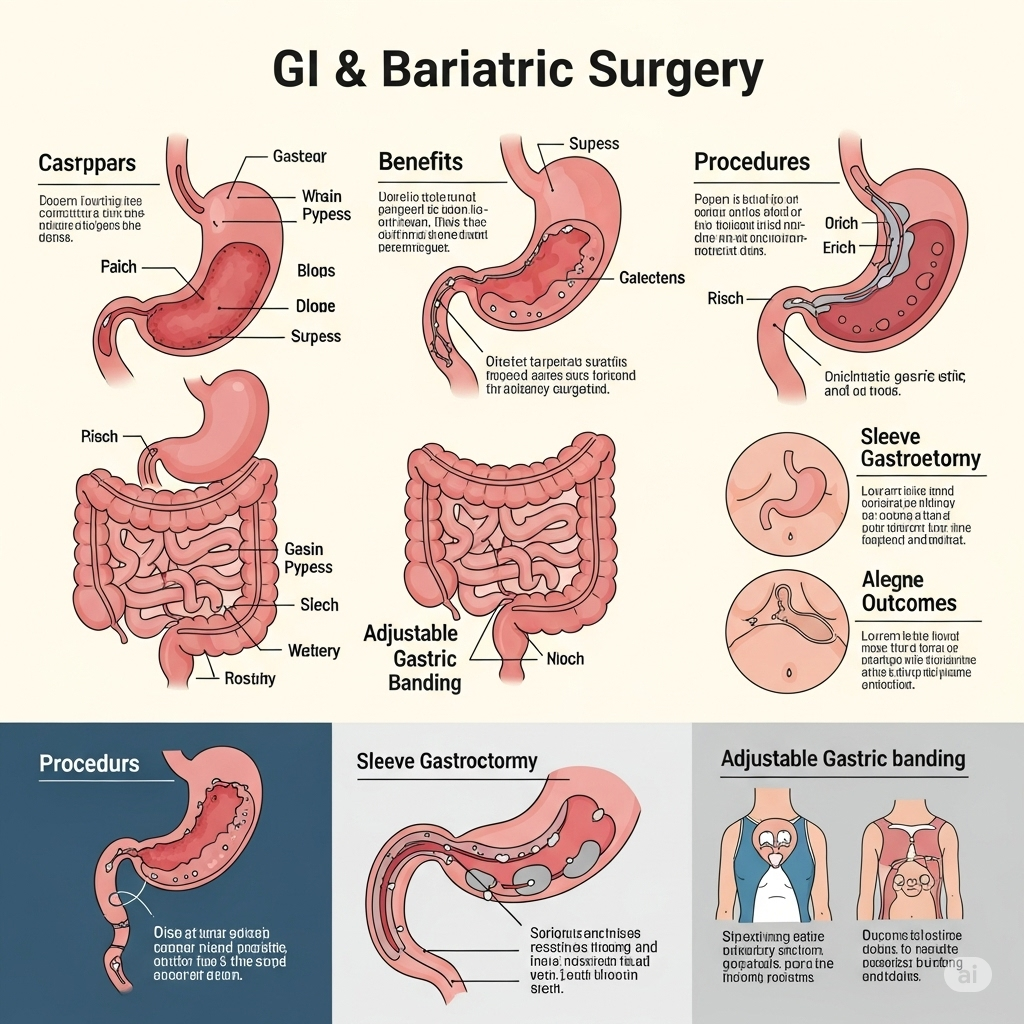
- **Bariatric Surgeries:** (e.g., gastric bypass, sleeve gastrectomy) for weight loss.
If you have been diagnosed with a GI condition that may require surgery, or if you are seeking comprehensive management for a complex digestive disorder, Dr. Neeraj Dhar offers expert guidance and coordinated care in Faridabad. His commitment to integrated patient care ensures the best possible outcomes for your digestive health.